Rosie Barry doesn’t just have a view on the importance of Women In Sport Week, the annual WIS promotion headed by Sport Ireland. She has an ambitious eye on a time when this type of promotional initiative isn’t needed, and that women’s sport happens all year round without the need to make a special fuss once a year.
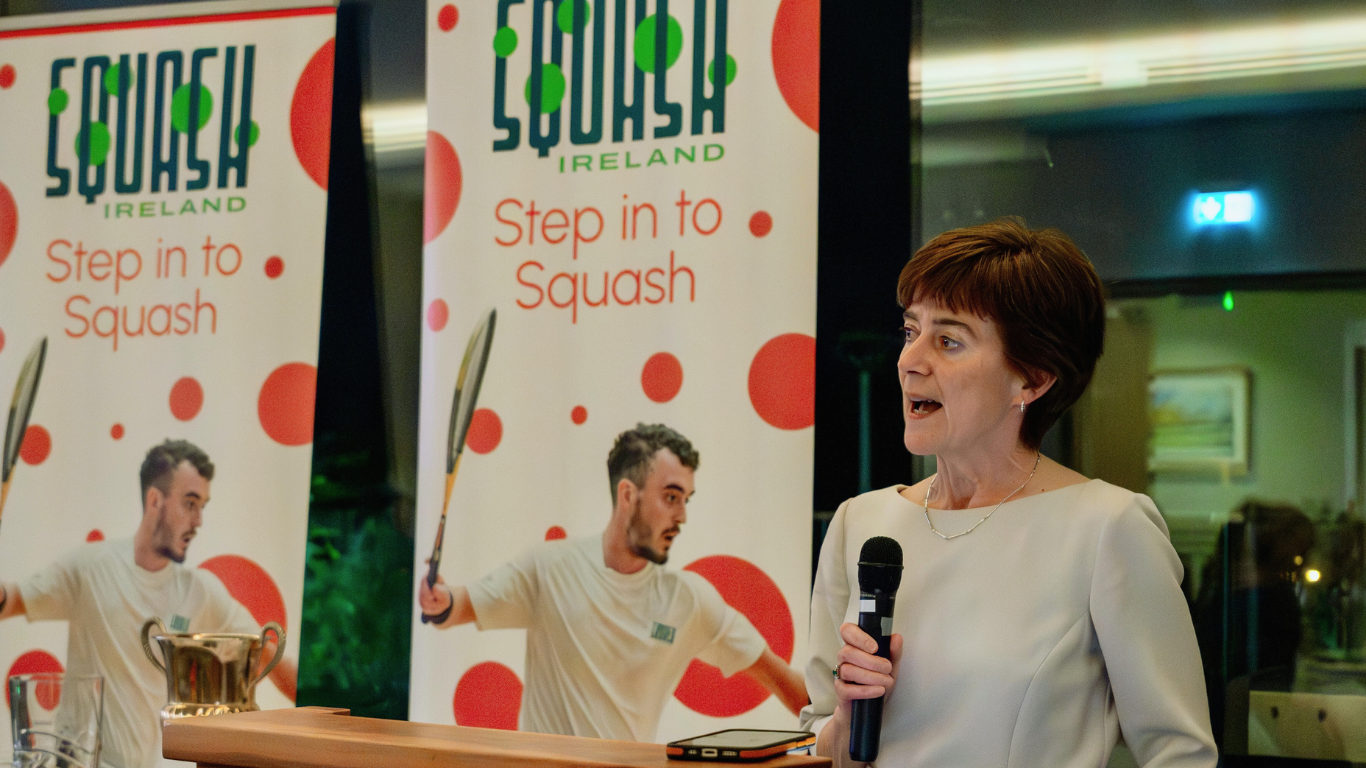
“Absolutely,” enthused the Squash Ireland president. “In Ireland, we’re ahead of the curve in terms of that emphasis on women in sport and coverage and improving funding for women in sport.
“I know from my experience of working at European Squash level in some Eastern European countries, it’s very different, so it’s just seeing the effect of gender quotas on boards, so that you are thinking along the lines of equality, that’s really important.
“In an ideal world, absolutely, it will be a measure of success when we don’t need to have a specific Women In Sport week in the future, and I do hope that day comes sooner rather than later.”
As it stands, though, Women In Sport weeks are of tremendous value in getting the message out around Ireland that a sport like squash is just as welcoming for women and girls as it is for men and boys.
“The women in squash scenario has become much more apparent or has felt more accessible from the organisation’s perspective in a meaningful way since we have become more professional,” said Barry, reflecting on the promising strides taken in recent years.
“That was with the launch of our strategic plan in 2022, appointing a CEO, which meant that we had an increase in staff, and so we were able to take on more work in areas that when we were purely volunteer-led and delivered organisation, we couldn’t take things any further.
“So the programmes for women in squash now are more meaningful and we can access more women with staff appointment in development officer roles, reaching out of clubs, identifying which clubs have women squash programmes and also rolling out specific initiatives such as disco squash or HIIT squash which was created with our only female squash tutor and it works really well for women who want to give it a try.”
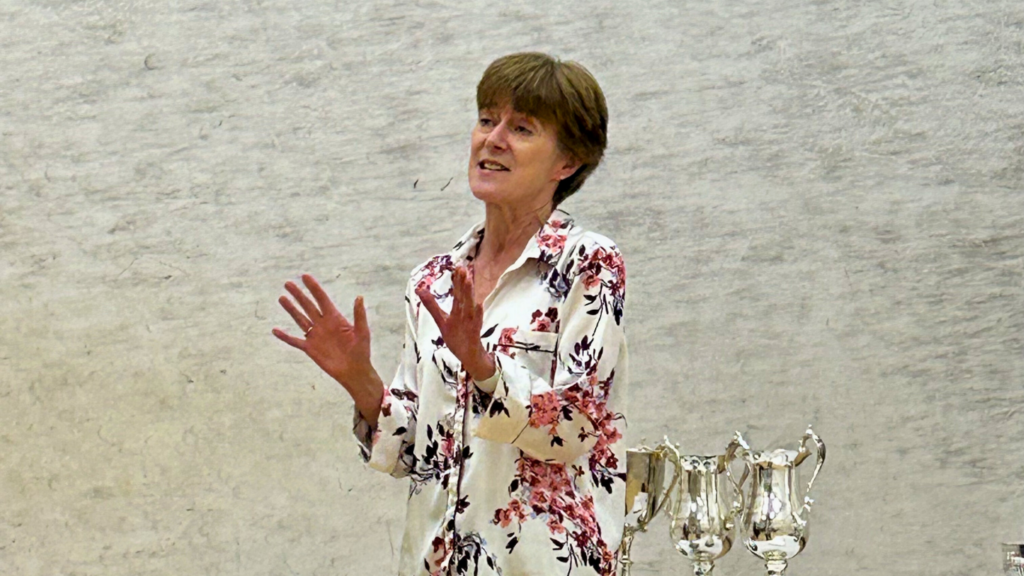
Barry was never reticent in being proactive with her sport. She took up squash a long time ago at the Old Belvedere courts and is still a force to be reckoned with, having won last weekend’s WO60 title at the Irish Masters Nationals and then getting picked as captain of the Ireland WO60s team for the Home Internationals in Galway on April 10th/11th.
“I would have been school captain for sport, I would have kind of been captain of teams that I played on, whether it was hockey in school or tennis and squash at club level,” she explained about her starting point.
“And it was just a natural progression, I was selector for Leinster women, then the Irish women, and was then the manager of the Irish women’s team. It was more like one thing led to another rather than me setting out and saying, ‘This is what I want to do’.
“But I have gained a huge amount on a personal as well as a professional level in terms of being involved in sport, and I am curious about how this is done and what I can learn about how to do it. By being involved, there always seems to be something else that you might end up doing and have an interest in and hopefully make a difference.”
It was 2019 when Barry was appointed Squash Ireland president, going on to help produce the Connecting the Dots 2022-2027 strategic plan to accelerate the sport’s rebound coming out of the pandemic.
Being busy in balancing her squash activity with work in occupational therapy, Barry is fully aware of the challenge involved in getting more women involved in sport. “Squash, you know, percentage-wise, about 20 per cent of the playing population are female, so 80 per cent male.
“And at organisational level, it has largely been male-dominated at European Squash level and not always, but certainly in Squash Ireland, we have a good gender balance now.
“It’s probably not just peculiar to squash but girls in their teenage years drop away from sport, so how do we re-engage them? That’s a live question, really, for any sport.
“And then women are often busy with families, working outside the home, so it’s finding ways to engage them. In general, men are good at putting their hands up and saying, ‘Yeah, I can do that’.
“Women are much more likely to be reticent, but if they are asked, women are really good at stepping forward and saying, ‘Yeah, I can do that’ and taking it on. So the engagement is getting women involved, and it’s different.
“I do think we have to specifically tap someone on the shoulder and say, ‘Listen, would you think of getting involved?’ Whereas men are more inclined to put their hand up and say, ‘Yeah, that’s me’.
“That’s something that we do need to be cognisant of in terms of engaging women as volunteers, but also wouldn’t it be great if it were a magic wand and we could keep the teenage girls involved in whatever sport it is, as long as they are moving their bodies and enjoying the exercise? That’s a million-dollar question, really.”
In terms of standout examples of women in squash progress, Barry volunteered three highlights. “Westport Squash Club, it’s a two-court squash facility, a really dynamic committee, and they have a fabulous women’s squash section. Monday nights, it’s led by one of the women.
“Gerry Galvin is the key figure behind Westport’s development and it’s testimony to him and the women who got involved down there as to how thriving that squash women’s section is. They are a great model.
“I’d also single out Eoin Ryan in Sutton. As a professional coach, he’s well recognised for the success he has had in bringing through players from junior to senior level, but the court usage in Sutton is almost at 90 per cent usage every day.
“That’s down to Eoin reaching out to women, mothers of kids who play squash, so there is women’s programmes in the morning, and they come down and play, have a coffee, and so that is another very successful initiative in terms of driving women’s participation.
“In my own club, Fitzwilliam, this year there is multi-sports activities, and you can book your activity, whether it’s a yoga class, pilates, whatever, but this year a really excellent initiative is including squash lessons delivered by a female coach.
“I have come across lots of women who are coming up to me in the club saying I haven’t played squash before, but we tried it and it’s great fun. So it’s visibility even within the club that you presume it’s visible and then you realise there is always ways to improve what you are doing, and it will have the deserved results.”
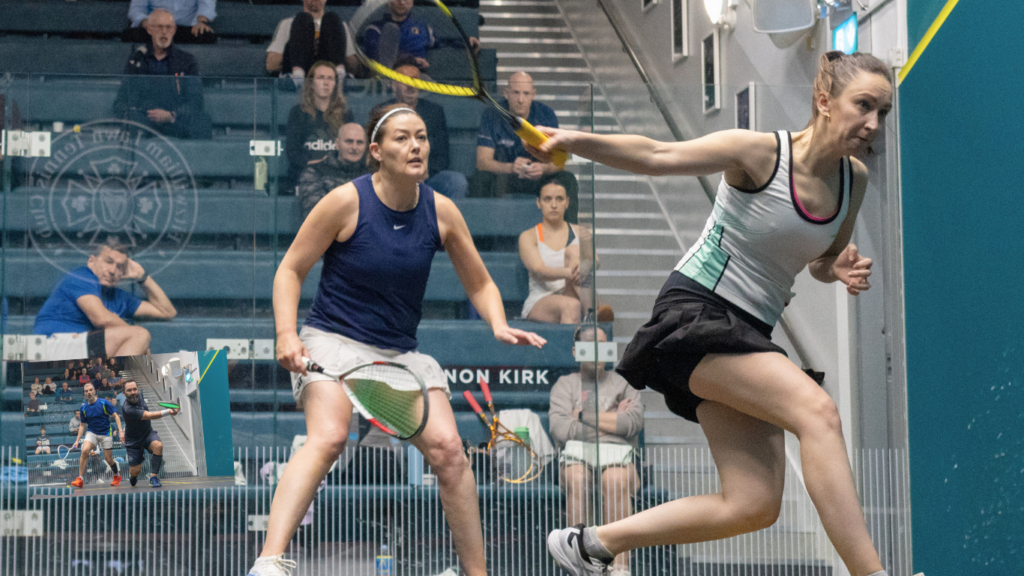
The final word in Barry’s Women In Sport Week catch-up with the Squash Ireland website goes to her emotional reaction last month when talking to a packed Fitzwilliam on Irish Senior Nationals finals day. The edge-of-seat spectacle produced by Hannah Craig and Breanne Flynn gave her the feels.
“It was just the excellence of the sport at the hands of two amazing female athletes that day, it really got me. I mean, the standard of the squash, everyone was on their seats all the way through that final, it could have gone either way.
“And in the context of last year’s final being much more one-sided (Craig won 3-0 in 2025 compared to the 3-2 down-to-the-wire epic of 2026), so it was almost like the reverse of what happened in the previous year’s finals.
“The men’s one (won 3-2 by Conor Moran) was scintillating and nerve-racking. This year the women’s final delivered that gladiatorial contest and for me it was just wonderful.”