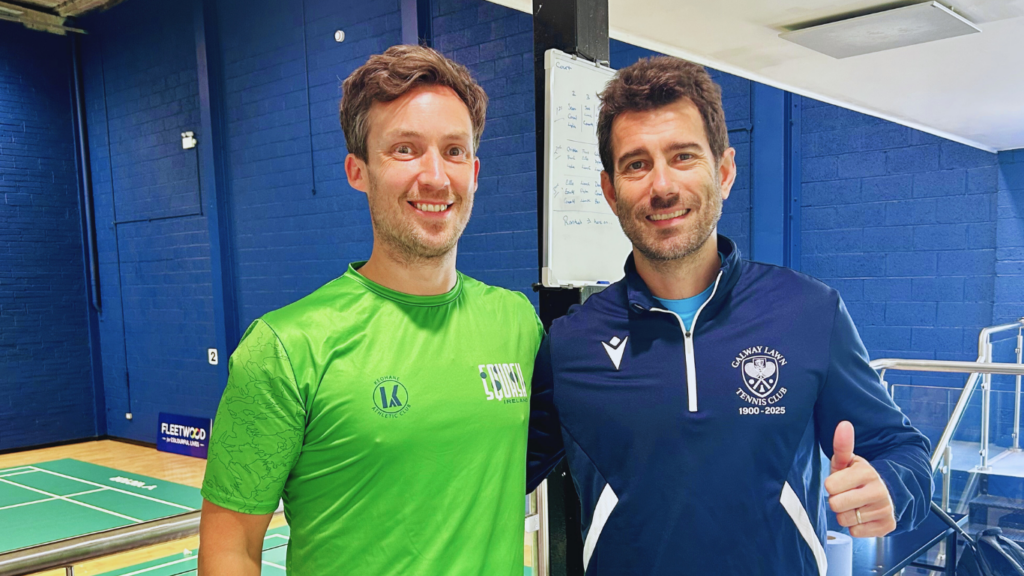
Arthur Gaskin was in his element this past week in Dublin. Coaching squash is nothing new for ex-PSA tour professional and eight-time Irish National champion; the 40-year-old has been mentoring at Brown University in America’s Providence since 2017.
However, heading up the first Junior Performance Academy camp in Dublin was something very close to the former Irish international’s heart. It was last October when he signed on the dotted line as Ireland head coach, the part-time role that has seen him jet over and back from his Rhode Island base.
Assisting our leading senior players is the shop window aspect of his work, sharing his wisdom to get them higher up the PSA rankings and helping them be the best they can be in the colours of Ireland. However, nurturing the next generation of aspiring players was also on his to-do list when he came on board.
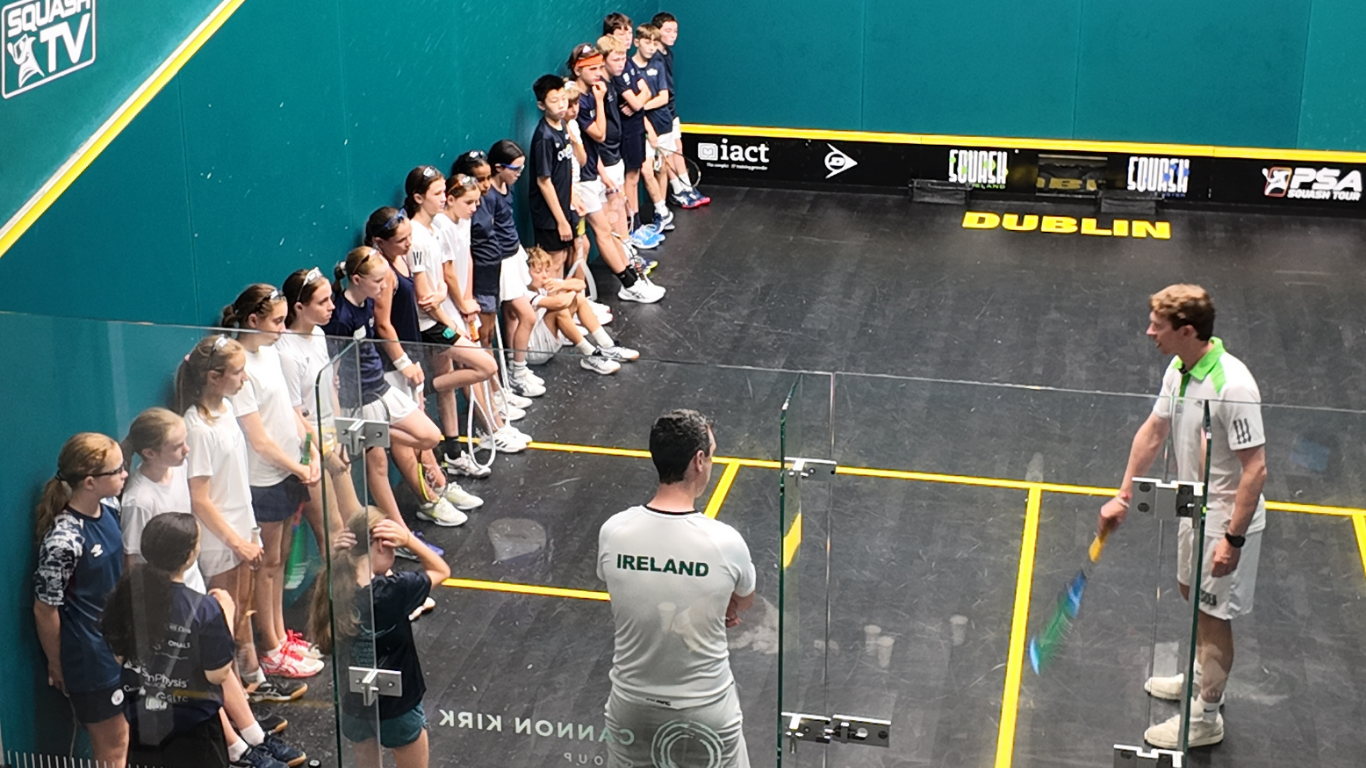
That ambitious Squash Ireland plan for the stars of tomorrow launched on June 1st, and its initial fruition was the gathering of 30-plus U13, U15, U17 and U19 players at Fitzwilliam for a four-day camp where Gaskin was enthusiastically assisted by David Noone, the junior performance coach, and junior development coach Michael Conroy.
It was Tuesday, with the afternoon reps ongoing for the U13/15 players at Fitzwilliam and the U17/U19s away on a reccie at the Sport Ireland campus, when Gaskin took a moment to reflect on all the encouraging work that has happened since he agreed to head up the coaching unit.
“The long-term goal of where we want to be as an organisation, that’s easy to see,” he began. “But putting those steps together, there were so many things that we had to do initially to lay a really strong foundation that we can use as a platform to push on from.
“It’s like being part of a start-up company where there is so much happening at the same time, one thing after another, after another. Then all of a sudden, 10 months in, I feel as though we are in a really strong position.
“Our top players are being supported a little bit more, we have been able to secure a little bit more funding and our juniors now, the high-performance academy is a great opportunity for the youngsters to not only have access to resources but hopefully get educated in other elements of the game when it comes to being an athlete, how you manage your body and learning about foods, recovery, fluids and just feeling supported and having a support system. So, it’s very exciting.”
Gaskin felt that head coach was a position he couldn’t refuse. “There were a couple of factors. A few people had reached out and asked if I was interested in the role, and I found it very nice that they thought I would be a good person for it.
“From my own perspective, and maybe thinking specifically about the senior players, having a resource, I would have had a relationship with some of the players already. They would have reached out or they would have visited for training camps, but it’s a little bit better for them in an official capacity.
“It’s good for me anyway. Hopefully, it’s good for everyone and everyone feels great about it, but I just love the idea. Like, I have played for Ireland. Squash in Ireland is very important to me. I just wanted to be able to add value and contribute where I could.”
He certainly had a pep in his step watching him in action on Tuesday, guiding the teenagers through a variety of reps and then during lunch, knocking up with Ireland’s two leading men’s players, Conor Moran and Sam Buckley.
“It’s great. When you are surrounded by young people who are enthusiastic and bring great energy, it’s super fun. I couldn’t be more grateful,” he said before getting into the nuts and bolts of the JPA. “The camp is great, it kicks off the junior high-performance academy.
“It’s the first time the group has been able to get together since we launched it on June 1st. So that part of it is cool, just to get everyone together. And then in terms of timing of the season, with the summer coming to an end and school starting back, it’s a great opportunity for players just to get lots of reps in.
“Once you get into school season, you don’t have those full days. Weekends are generally taken up with events, and during the week, if you can hit an hour to two hours a day, you are doing well. So here the kids are hitting for five hours each day, and it has been pretty awesome.
“It’s different for each (age) bracket. We are working this week with three rotations – the strongest, generally speaking, are the older kids, there are a couple of young kids in there, and the weaker kids then that have maybe just started on the lower end,” he said, going on to explain what he hoped they would go away from Fitzwilliam with after four days of tuition.
“For the lower end, that technically they understand a little bit more what it is they need to do. So, they will have things to do with their grip and the wrist position, body position, and if they know a little bit of that, then they can take that into their home club with their home coach or even just playing with their friends, because the game is already fun.
“But as your technique gets better, it becomes more fun because you can do more with the ball, and the rallies get longer – the satisfaction kids on the lower end get when getting the ball off the back wall, for example. So it’s just being equipped with the tools, knowing what it is they need to do to be able to do that consistently well, to build confidence in that and therefore have more enjoyment.
“I’m excited by it,” he added about the potential he saw across the week. “The 13s and 15s, there are some really good young talented players. Talent is maybe the wrong word, but they are certainly committed and they are putting lots of time into it, so it bodes well. If they continue with that same level of commitment and same love for the sport, they can be really good.”